
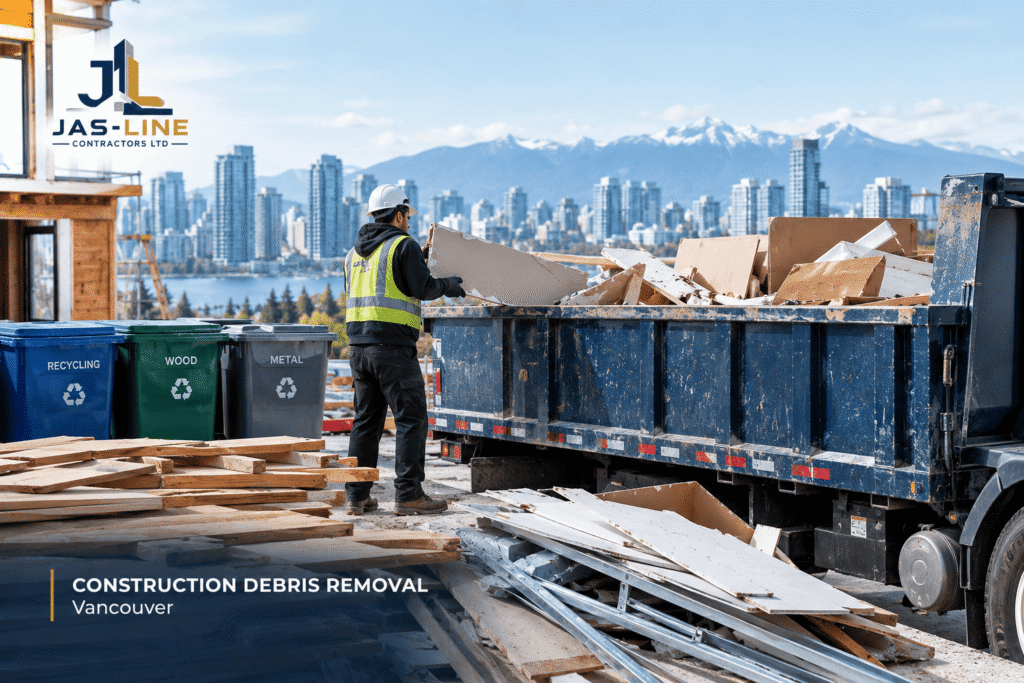
Construction and renovation projects generate waste at almost every stage. Old materials are removed, new materials are cut and installed, and packaging and off-cuts accumulate as the work progresses. Without a practical plan for handling that material, a job site can quickly become difficult to access and harder to manage.
For homeowners, builders, contractors, and property managers, construction debris removal in Vancouver is therefore more than simply taking unwanted material away. It involves identifying the types of waste being generated, keeping the work area organized, separating materials where appropriate, and making sure waste is directed to the right disposal or recycling facility.
In Vancouver, this is particularly relevant because construction and demolition materials are subject to specific disposal and recycling requirements. The City of Vancouver identifies materials such as drywall, concrete, metal, corrugated cardboard, and certain hazardous or banned materials as subject to specific handling rather than ordinary landfill disposal.
This guide explains what construction debris includes, when removal is needed, how the process generally works, and what Vancouver property owners and construction professionals should consider.
What is Construction Debris?
Construction debris is the unwanted material generated during construction, renovation, demolition, repair, and related work.
Depending on the project, it can include:
- Wood and lumber off-cuts
- Drywall and gypsum board
- Concrete and masonry
- Scrap metal
- Flooring materials
- Roofing materials
- Packaging and cardboard
- Insulation
- Cabinets and countertops
- Old doors and windows
- Tile and other finish materials
The type and volume of debris depend heavily on the project. A bathroom renovation will generate a very different waste stream from a full building demolition.
It is also worth distinguishing ordinary construction debris from hazardous materials. Materials that require specialized assessment, removal, or disposal should not simply be placed with general construction waste.
Why Construction Debris Removal Matters in Vancouver
Proper waste handling is part of keeping a construction site organized and reducing unnecessary material going to landfill.
Metro Vancouver reports that material from construction, demolition, and renovation makes up about one-third of the waste sent to landfills in the region. The regional authority promotes reuse and recycling of construction materials, including wood, and provides resources for contractors, project managers, and homeowners.
The City of Vancouver also has specific requirements for certain demolition projects. For example, its Green Demolition By-law establishes reuse and recycling requirements for certain older homes.
This means that construction debris removal Vancouver projects should be planned around the actual materials being generated rather than treating everything as general garbage.
📞 Call us or Contact Us today.
What Does Construction Debris Removal Include?
The exact scope depends on the contractor, project, material type, and disposal arrangement. A typical construction debris removal service may involve several stages.
1. Assessing the Debris
Before removal begins, the materials should be identified.
This helps determine:
- What can be reused
- What can be recycled
- What requires a particular disposal facility
- Whether hazardous materials may be present
- What equipment or containers are appropriate
- How much material needs to be removed
For larger projects, identifying the waste stream before work begins can make the removal process easier to coordinate.
2. Sorting Materials
Construction waste is not always one uniform material.
Wood, metal, cardboard, drywall, concrete, and other materials may have different recycling or disposal routes. Separating materials where practical can help direct them to the appropriate facility.
The City of Vancouver specifically identifies recyclable materials such as drywall, concrete, metal, and corrugated cardboard as materials that are not accepted as ordinary landfill construction waste.
3. Collecting and Loading
Once material has been sorted, debris can be collected from the work area and loaded for transportation.
Depending on the project, this may involve:
- Manual loading
- Carts or bins
- Mobile containers
- Trucks
- Equipment for larger or heavier materials
Access is a practical consideration, particularly on urban residential sites, multi-unit buildings, and properties with limited loading space.
4. Hauling the Material
After loading, debris is transported to the appropriate recycling, recovery, or disposal facility.
The destination depends on what is being transported. A load containing recyclable materials may need to go somewhere different from a load of accepted landfill material.
This is one reason it is useful to establish the disposal route before removal rather than assuming all construction waste can go to one location.
5. Recycling, Reuse, or Disposal
The final stage is determining what happens to the material.
Where practical, construction materials may be reused or recycled instead of being sent directly to landfill. Metro Vancouver’s construction and demolition waste program promotes both approaches as part of regional waste reduction efforts.
For example, Vancouver provides resources for finding places that accept reclaimed building materials such as lumber, flooring, doors, cabinets, fixtures, and windows.
Common Types of Construction Waste
Different construction projects produce different waste streams. Understanding the material helps determine how it should be handled.
Wood and Lumber
Wood can include framing off-cuts, plywood, damaged boards, trim, and other timber products.
Clean wood may have recycling or recovery options, while treated or contaminated wood can have different requirements. The City of Vancouver lists restrictions on certain types of wood at its landfill.
Drywall
Drywall is common in renovation and interior construction projects.
It should not automatically be mixed with general garbage. The City of Vancouver states that used drywall from businesses and contractors is not accepted at the Vancouver Landfill.
Concrete and Masonry
Concrete, brick, stone, and other masonry materials can be heavy and may require specific transportation and recycling arrangements.
Large quantities should be planned separately from lighter renovation debris.
Metal
Metal can come from framing components, piping, fixtures, ductwork, hardware, and other construction materials.
Because metal can often be recovered for recycling, separating it from mixed waste can be useful where site conditions allow.
Cardboard and Packaging
New construction and renovation projects can produce considerable amounts of cardboard, plastic wrapping, pallets, and other packaging.
Keeping packaging separate from heavier construction debris can make sorting and recycling easier.
Flooring, Cabinets, and Fixtures
Renovations can generate old flooring, cabinets, countertops, sinks, doors, windows, and other components.
Some materials may have reuse potential rather than being treated as waste. Vancouver and Metro Vancouver provide resources for reclaiming and reusing building materials.
Construction Debris Removal for Renovation Projects
Renovation projects often have a mixture of demolition waste and newly generated construction waste.
For example, a kitchen renovation could produce:
- Old cabinets
- Countertops
- Flooring
- Drywall
- Packaging
- Wood off-cuts
- Metal components
- Appliances or fixtures
A bathroom renovation may produce tile, drywall, fixtures, flooring, packaging, and other materials.
For homeowners and smaller contractors, planning construction debris removal Vancouver services before demolition begins can help prevent waste from accumulating in hallways, driveways, garages, or other working areas.
Construction Debris Removal for New Builds
New construction usually generates a different mix of waste.
Common materials can include:
- Lumber off-cuts
- Engineered wood products
- Drywall scraps
- Packaging
- Insulation off-cuts
- Plastic wrapping
- Cardboard
- Metal scraps
- Flooring and finishing-material waste
On a larger project, debris removal may need to happen regularly rather than waiting until the end of construction.
Scheduled removal can help keep access routes and active work areas clearer as the project progresses.
Construction Debris Removal for Demolition
Demolition projects can generate substantially larger quantities of material than ordinary renovation work.
There may also be additional requirements before demolition begins.
For certain Vancouver demolition projects, property owners and contractors must address hazardous building materials before demolition work starts. The City states that hazardous building materials must be identified, removed, and disposed of according to applicable requirements.
This is not a situation where ordinary construction waste removal Vancouver services should automatically be treated as sufficient. Hazardous-material assessment and abatement may need to be handled separately by appropriately qualified contractors.
Construction Debris vs. Hazardous Materials
One of the most important distinctions on a demolition or renovation site is the difference between ordinary construction debris and potentially hazardous material.
Examples of materials that may require specialized handling include certain asbestos-containing materials, lead-containing materials, contaminated materials, and other regulated substances.
The City of Vancouver specifically requires hazardous building materials to be identified and appropriately dealt with before certain demolition work begins.
If there is uncertainty about a material, it should not simply be mixed into a general debris load. The appropriate assessment and handling process should be confirmed first.
📞 Call us or Contact Us today.
When Should Construction Debris be Removed?
There is no single schedule that works for every project.
Removal may take place:
- During demolition
- After a major phase of construction
- At regular intervals during a long project
- Before inspections or walkthroughs
- Before a final clean
- At project completion
For an active construction site, waiting until the end of the project is not always practical. Accumulated debris can take up working space and interfere with access.
For smaller renovations, removal may be arranged after demolition or once enough material has accumulated to justify a pickup.
The project schedule, available storage space, site access, and type of material should all be considered.
Construction Site Cleanup vs. Debris Removal
These terms are sometimes used interchangeably, but they do not always mean exactly the same thing.
Construction debris removal focuses primarily on collecting, loading, hauling, and appropriately handling unwanted construction materials.
Construction site cleanup can be broader. It may include sweeping work areas, clearing access routes, consolidating materials, removing loose debris, and preparing the site for the next stage of work.
A final post-construction cleaning is different again. That stage may focus on fine dust, floors, windows, fixtures, cabinets, and finished surfaces after the construction work is complete.
For this reason, the scope should be clearly defined before work begins.
Common Problems With Construction Debris Removal
Several issues can make debris management more difficult.
Mixing Different Materials
Putting recyclable, general, and restricted materials into the same load can complicate disposal and may prevent certain materials from being accepted at a facility.
Leaving Debris Until the End
Large amounts of debris can take up valuable working space and make movement around a site more difficult.
Not Planning for Heavy Materials
Concrete, masonry, and other dense materials can become heavy quickly. Transportation and container requirements should account for the material being removed.
Ignoring Site Access
A property may have limited driveway access, underground parking, narrow lanes, elevators, or building restrictions. These conditions can affect how debris is collected and transported.
Assuming Everything Can Go to the Landfill
This is not necessarily the case in Vancouver. The City identifies several construction materials that are not accepted at the landfill and provides separate recycling and disposal guidance.
How to Plan Construction Waste Removal in Vancouver
A simple waste-management plan can make debris removal easier.
Step 1: Identify the Materials
Determine what the project is expected to generate.
Step 2: Separate Reusable and Recyclable Materials
Where practical, keep materials that can be reused or recycled separate from general waste.
Step 3: Confirm Disposal Requirements
Check the requirements for the specific materials and the intended disposal or recycling facility.
Step 4: Plan Collection Timing
Decide whether debris needs to be removed once, periodically, or at specific project milestones.
Step 5: Confirm Site Access
Consider where bins, trucks, carts, or other equipment can safely access the property.
Step 6: Define Responsibilities
Make it clear whether the contractor, property owner, cleaning company, or waste-removal provider is responsible for loading, hauling, sorting, and disposal.
This is particularly useful when several contractors are working on the same project.
How to Choose a Construction Debris Removal Service
If you are hiring a company for construction debris removal in Vancouver, ask specific questions before the work begins.
Consider asking:
- What types of construction debris do you accept?
- Is loading included?
- Is hauling included?
- How are recyclable materials handled?
- Are there materials you do not accept?
- How are disposal charges determined?
- What site-access information is required?
- Can removal be scheduled around the construction timeline?
- Are hazardous materials excluded?
- Is the scope provided in writing?
For larger projects, it can also be useful to provide photographs, an approximate volume, a list of materials, and information about access to the property.
What about Vancouver’s Construction and Demolition Waste Requirements?
Waste requirements can vary depending on the project and the jurisdiction involved.
The City of Vancouver has specific construction and demolition waste rules and disposal guidance. Its landfill accepts certain construction materials under specified conditions but excludes recyclable materials such as drywall, concrete, metal, and corrugated cardboard, as well as hazardous or banned waste.
There are also specific reuse and recycling requirements for certain demolition projects. For example, the City’s Green Demolition By-law applies to certain one- and two-family homes built before 1950 and establishes minimum reuse and recycling requirements.
Because requirements can change and may depend on the type and location of a project, contractors and property owners should verify the applicable municipal and regional requirements before arranging disposal.
📞 Call us or Contact Us today.
Residential vs. Commercial Debris Removal
Residential Projects
Residential projects can include:
- Kitchen renovations
- Bathroom renovations
- Basement renovations
- Home additions
- Flooring replacement
- Interior remodelling
- Small demolition projects
- New home construction
The volume may be relatively small, but access can sometimes be challenging, especially in dense neighbourhoods, laneway properties, or multi-unit buildings.
Commercial Projects
Commercial construction can generate larger and more varied waste streams.
Examples include:
- Office renovations
- Retail construction
- Tenant improvements
- Restaurant renovations
- Multi-unit residential projects
- Commercial demolition
- Building upgrades
Commercial construction debris removal Vancouver projects may require scheduled pickups, designated waste areas, coordination with multiple trades, and documentation of material handling.
Frequently Asked Questions
1. What is included in construction debris removal?
A construction debris removal service may include collecting, loading, hauling, sorting, and transporting construction waste to an appropriate recycling, recovery, or disposal facility. The exact scope depends on the service provider and project.
2. What types of construction debris can be removed?
Common materials include wood, drywall, flooring, metal, cardboard, concrete, tile, packaging, cabinets, and other renovation or construction materials. However, accepted materials vary by facility and service provider.
3. Can construction debris be recycled in Vancouver?
Yes. Many construction materials have recycling or reuse options. Metro Vancouver promotes reuse and recycling of construction and demolition materials, and the City of Vancouver identifies specific materials that should not be disposed of as ordinary landfill waste.
4. Is hazardous material included in construction debris removal?
Not necessarily. Hazardous materials can require separate assessment, removal, and disposal procedures. For certain Vancouver demolition projects, hazardous building materials must be identified and dealt with before demolition begins.
5. When should construction debris be removed?
Removal can take place during demolition, at regular stages of construction, after a renovation phase, or at project completion. The appropriate schedule depends on the project’s size, waste volume, site access, and construction sequence.
6. What is the difference between construction debris removal and construction site cleanup?
Debris removal generally focuses on collecting and hauling unwanted construction materials. Site cleanup can include broader tasks such as sweeping, consolidating debris, clearing work areas, and preparing the site for the next phase.
Final Thoughts
Good debris management starts before the waste begins piling up.
For construction debris removal in Vancouver, the right approach depends on the type of project, materials being generated, site access, timing, and applicable disposal requirements. Wood, drywall, concrete, metal, cardboard, and other materials may have different reuse, recycling, or disposal options.
The City of Vancouver and Metro Vancouver both provide resources aimed at reducing construction and demolition waste through reuse and recycling.
For homeowners, builders, contractors, and property managers, having a clear plan for collection, sorting, hauling, and disposal can make the construction process more organized and reduce confusion during the later stages of a project.