
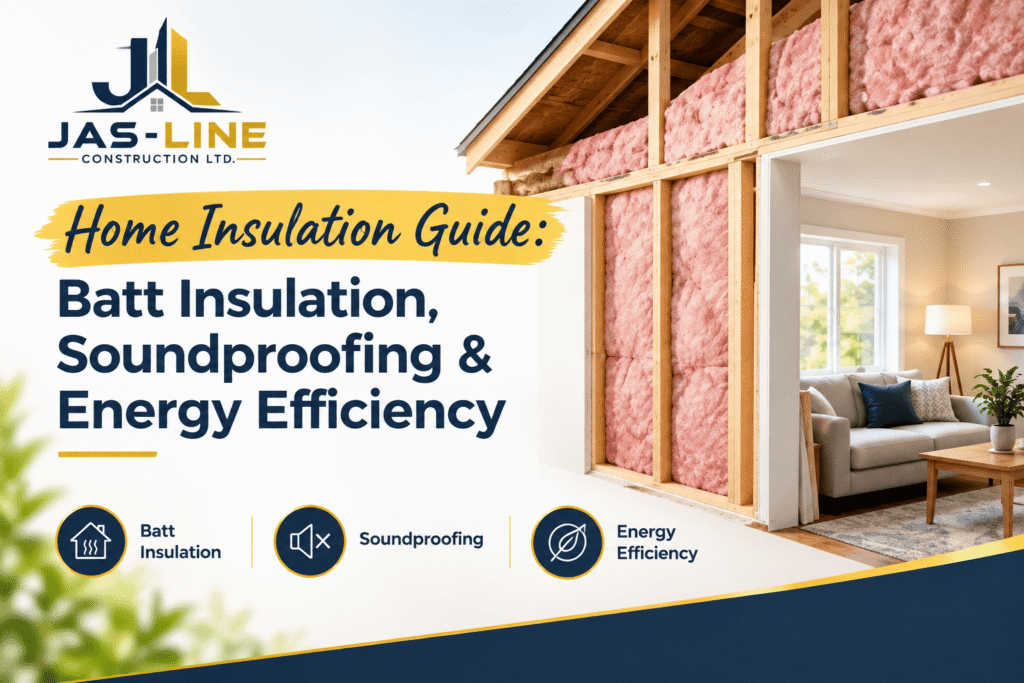
A well-insulated home is not simply a warmer home. Proper insulation helps slow heat transfer through walls, ceilings, floors and other parts of a building. When combined with appropriate air sealing, moisture control, windows, doors and ventilation, insulation can contribute to better indoor comfort and overall building performance.
For homeowners considering home insulation Vancouver services, choosing the right insulation is only one part of the process. The existing construction, location of the insulation, condition of the building assembly and goals of the project all need to be considered.
The BC Building Code includes requirements related to thermal insulation, air leakage, vapour diffusion and condensation control. These requirements can vary depending on the building and the specific assembly, so applicable requirements should be verified before construction begins.
Whether you are building a new home, renovating an older property, finishing a basement or upgrading an attic, understanding the basics of insulation can help you make informed decisions.
What is home insulation?
Home insulation is a material installed within building assemblies to reduce the rate at which heat moves between areas with different temperatures.
Insulation may be installed in:
- Exterior walls
- Attic and ceiling assemblies
- Floors over unheated areas
- Basement and foundation walls
- Interior walls where sound control is required
Insulation is only one part of a building envelope. Air leakage, moisture movement, vapour control, windows, doors, ventilation and construction details can all affect building performance.
For this reason, an insulation contractor Vancouver homeowners choose should consider the complete assembly rather than simply adding insulation wherever there is available space.
What is batt insulation?
Batt insulation is a commonly used insulation format in residential construction. It is manufactured in pre-cut sections or rolls designed to fit between framing members such as wall studs, ceiling joists and floor joists.
Batt insulation can be manufactured from materials such as fibreglass or mineral wool. Different products are available for different applications and thermal-resistance requirements.
Some advantages of batt insulation include:
- It can fit between standard framing members.
- It is available in different thicknesses and thermal-resistance levels.
- It can be used in many wall, ceiling and floor applications.
- Some products can contribute to sound control.
- It can be suitable for new construction and renovation projects.
For batt insulation Vancouver projects, the product should be selected according to the particular building assembly rather than simply based on material type.
📞 Call us or Contact Us today.
Why does proper insulation matter in Vancouver?
Insulation helps control heat transfer between conditioned and unconditioned areas of a building. However, its performance depends on how it works with the rest of the building envelope.
A properly planned insulation system can help:
Improve indoor comfort
Insulation slows heat transfer through insulated assemblies. This can help reduce temperature differences between rooms and areas of a home.
Support energy efficiency
Reducing heat transfer can contribute to improved energy performance. Actual energy use depends on several other factors, including air leakage, windows and doors, heating and cooling systems, ventilation and overall building design.
Reduce uneven temperatures
Poorly insulated sections can sometimes contribute to colder walls, ceilings or rooms. Improving insulation in the appropriate areas may help create more consistent indoor conditions.
Support building-envelope performance
Insulation works together with air and vapour-control layers. The BC Building Code includes requirements concerning insulation, air leakage and vapour control within building assemblies.
For current code requirements, homeowners and contractors should refer to the Government of British Columbia’s BC Building Code resources rather than relying on a general insulation guide.
Wall insulation in vancouver homes
Exterior walls are one of the main areas considered when upgrading insulation.
Wall insulation Vancouver projects may involve new construction, renovation or removal and replacement of existing materials. The appropriate approach depends on the wall assembly, framing depth, available cavity space and condition of the existing materials.
Before installing insulation, contractors may need to consider:
- Existing framing
- Electrical wiring
- Plumbing
- Air sealing
- Moisture conditions
- Vapour-control layers
- Insulation thickness
- Existing sheathing
- Compatibility with the existing wall assembly
Simply filling a wall cavity with more insulation does not necessarily solve every building-envelope issue. The insulation needs to work with the rest of the wall assembly.
Ceiling and attic insulation
Heat can also move through ceilings and attic spaces, making these areas important when assessing a home’s insulation.
Ceiling insulation Vancouver projects should be planned according to the specific roof or ceiling assembly. In attic spaces, insulation must be installed carefully so that required ventilation pathways and other building components are not improperly blocked.
The BC Building Code includes thermal-resistance requirements for different building assemblies, including walls, roofs, ceilings, suspended floors and foundation walls. The applicable requirements depend on the building and assembly.
During an attic or ceiling insulation project, it is also useful to check for:
- Existing damaged insulation
- Air leakage
- Moisture problems
- Gaps around penetrations
- Obstructions
- Ventilation pathways
- Electrical and mechanical services
Basement insulation: What homeowners should know
Basements can require a different insulation approach because parts of the building may be below grade and in contact with the ground.
Basement insulation Vancouver projects may involve foundation walls, framed interior walls, floors or other assemblies depending on the property’s construction.
Moisture should be addressed before new insulation is installed. If there is water entry, leakage, condensation or damaged material, covering the problem with insulation is not a substitute for correcting the underlying issue.
A basement insulation project may therefore require consideration of:
- Existing moisture conditions
- Foundation-wall construction
- Water entry and drainage
- Existing insulation
- Air and vapour control
- Available wall cavity
- Interior finishes
Can insulation help with soundproofing?
Yes, certain insulation materials can contribute to sound control, but insulation alone does not make a room completely soundproof.
Soundproof insulation Vancouver projects generally need to consider the entire wall or ceiling assembly. Depending on the project, sound-control measures may include:
- Acoustic insulation within wall cavities
- Multiple layers of gypsum board
- Resilient channels or other decoupling methods
- Sealing gaps and penetrations
- Properly designed wall and ceiling assemblies
Mineral wool and other acoustic insulation products can help reduce sound transmission through cavities. However, the final result depends on the complete construction.
For example, a wall with acoustic insulation can still transmit considerable sound if there are gaps around doors, electrical boxes, plumbing penetrations or other openings.
📞 Call us or Contact Us today.
Insulation and energy efficiency: what homeowners should know
Adding insulation does not automatically make a home highly energy efficient.
Overall building performance depends on several factors working together, including:
- Insulation levels
- Air leakage
- Windows and exterior doors
- Heating and cooling systems
- Ventilation
- Moisture control
- Building-envelope design
- Installation quality
This is why insulation installation Vancouver projects should be considered as part of the property’s overall building-envelope strategy.
A well-insulated wall with significant air leakage may not perform as expected. Similarly, adding insulation without addressing an existing moisture problem can create additional concerns.
When should you consider replacing or upgrading insulation?
An insulation assessment may be worth considering if:
- Existing insulation is old, damaged or displaced.
- Some rooms consistently feel colder than others.
- Exterior walls are being opened during a renovation.
- You are finishing an unfinished basement.
- You are upgrading an attic or ceiling.
- Drafts or air leakage are noticeable.
- You are undertaking a major renovation.
- Existing insulation has been affected by moisture.
Not every situation requires complete insulation replacement. Depending on the condition of the assembly, the appropriate solution may involve repairing, adding to or replacing existing insulation.
Common insulation problems to watch for
Insulation problems are not always caused by the insulation material itself. Installation and surrounding construction details can have a significant effect on performance.
Gaps around framing
Gaps can leave sections of an assembly without the intended insulation coverage.
Compressed or displaced insulation
Batt insulation is designed for particular cavity dimensions. Unnecessary compression, gaps or displacement can affect how effectively it fills the intended space.
Unaddressed air leakage
Insulation and air sealing perform different functions. Insulation slows heat transfer, while air-control measures help limit uncontrolled air movement.
Moisture problems
Wet or moisture-damaged materials should not simply be covered with new insulation. The source of the moisture should be identified and addressed first.
Poor coordination with services
Electrical wiring, plumbing and mechanical services often pass through insulated assemblies. Insulation installation needs to account for these components without creating unnecessary gaps or interfering with other building-envelope layers.
Residential vs. commercial insulation considerations
The basic principles of heat transfer, air control and moisture management apply to both residential and commercial buildings, but the construction requirements can differ.
Residential insulation Vancouver projects may include detached homes, additions, basement renovations and interior upgrades.
Commercial projects can include offices, retail spaces, tenant improvements and other building types. The applicable code requirements, design details and construction coordination depend on the project.
For larger or more complex projects, insulation should be coordinated with the building design and other trades rather than treated as an isolated installation task.
How to choose an insulation contractor in vancouver
Choosing an insulation contractor Vancouver property owners can rely on starts with understanding how the contractor approaches the building assembly.
Before starting a project, consider asking:
- What type of insulation is appropriate for this application?
- How will the existing assembly be prepared?
- Are there visible moisture or air-leakage concerns?
- How will insulation be coordinated with electrical and plumbing services?
- How will air and vapour-control layers be handled?
- What installation requirements apply to this assembly?
- How will the completed work be checked for gaps or displacement?
- What preparation and cleanup are included?
A good insulation company Vancouver should be able to explain the proposed approach clearly and identify any project-specific requirements that need to be confirmed.
For building-code questions, the applicable requirements should be checked against the current BC Building Code and, where necessary, confirmed with the appropriate building professional or authority.
Professional residential insulation installation
For residential insulation Vancouver projects, proper preparation and installation are important to achieving the intended performance.
Insulation should fit the intended cavity appropriately without unnecessary gaps, excessive compression or displacement. Installation also needs to account for electrical wiring, plumbing, structural components and other services.
Depending on the assembly, the work may also need to coordinate with:
- Air barriers
- Vapour-control layers
- Moisture-management details
- Ventilation pathways
- Fire and safety requirements
- Interior finishes
The objective is not simply to fill a cavity. The insulation should be installed as part of the complete building assembly.
Why choose professional insulation installation?
Insulation work can appear straightforward once a wall or ceiling is open, but different parts of a property can require different approaches.
An experienced contractor can help with:
- Selecting suitable insulation for the application
- Preparing the installation area
- Identifying visible moisture concerns
- Installing insulation consistently
- Working around plumbing and electrical services
- Considering air and vapour-control requirements
- Coordinating insulation with existing construction
- Preparing the area for the next stage of work
The BC Building Code contains requirements related to insulation and vapour control, so project-specific requirements should be reviewed before work begins.
Frequently asked questions
1. What type of insulation is best for a Vancouver home?
There is no single insulation type that is suitable for every home. Batt insulation, mineral wool, fibreglass and other products have different applications. The appropriate choice depends on the building assembly, available space and project requirements.
2. Is batt insulation suitable for exterior walls?
Batt insulation can be suitable for many framed wall applications when the product and thickness are appropriate for the assembly. Correct fitting and coordination with other building-envelope components are also important.
3. Can insulation reduce noise between rooms?
Yes. Some insulation products can help reduce sound transmission through wall and ceiling cavities. However, effective sound control usually depends on the complete assembly, including framing, drywall, decoupling and sealing details.
4. Should wet or damaged insulation be replaced?
It depends on the material, extent of damage and cause of the moisture. The source of the moisture should be addressed first, and the affected materials should be assessed before deciding whether repair or replacement is appropriate.
5. Does adding more insulation always reduce energy use?
Not necessarily. Insulation can reduce heat transfer, but overall energy performance also depends on air leakage, windows, doors, heating and cooling equipment, ventilation and other building-envelope factors.
6. When should I have my home’s insulation assessed?
An assessment can be useful during a major renovation, basement finishing, attic upgrade or wall renovation. It may also be worthwhile if you notice drafts, uneven temperatures, damaged insulation or suspected moisture problems.
Final Thoughts
Good insulation is part of a larger building system. Batt insulation, acoustic insulation and other insulation products can serve different purposes, but the appropriate solution depends on the building assembly, existing construction and goals of the project.
Whether you are considering wall insulation Vancouver, ceiling insulation Vancouver, basement insulation Vancouver or a broader residential insulation upgrade, the work should be planned around the complete building envelope.
Jas-Line Contractors Ltd. provides construction and renovation services in Vancouver, including work involving insulation, framing, drywall and related interior building components.
For more information about your project, visit Jas-Line Contractors Ltd. at https://jas-linecontractorsltd.com/.
📞 Call us or Contact Us today.