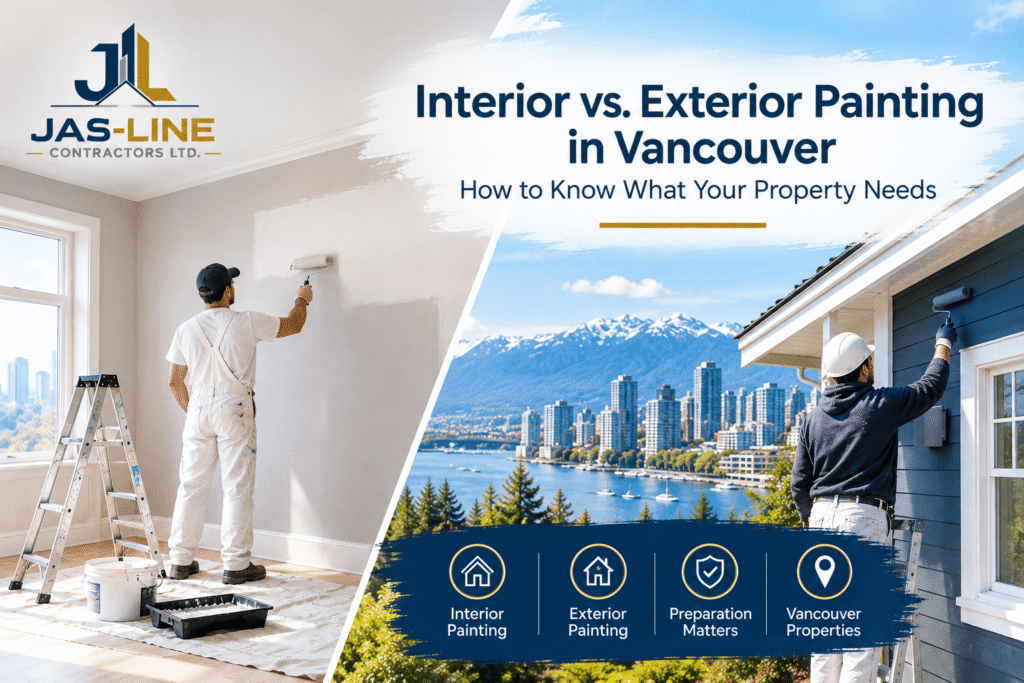
Painting can make a noticeable difference to the appearance and condition of a property. Whether you are updating an older home, preparing a commercial space for new tenants, or simply refreshing a property, choosing the right type of painting is an important first step.
But how do you know whether your property needs interior painting, exterior painting, or both?
The answer depends on the condition of your property, the surfaces that need attention, and the goals of your project. In Vancouver, exterior painting also requires careful consideration of moisture and changing weather conditions.
This guide explains the difference between interior and exterior painting, when each may be needed, and what to consider before hiring a painting contractor in Vancouver.
What Is Interior Painting?
Interior painting involves painting the surfaces inside a property. This can include walls, ceilings, doors, trim, baseboards, and other suitable interior surfaces.
Over time, interior walls can become marked, stained, faded, or damaged. Even when the walls are structurally fine, an old or worn paint finish can make a room look dated.
Professional interior painting in Vancouver may be suitable when you are:
- Updating the look of your home
- Renovating a room or entire property
- Repairing drywall before painting
- Covering stains, scuffs, or minor surface imperfections
- Changing outdated colours
- Preparing a property for sale or rental
- Refreshing an office, retail space, or other commercial interior
A good interior painting project is not simply about applying a new colour. Proper preparation is an important part of achieving a smooth and consistent finish.
What Is Exterior Painting?
Exterior painting focuses on surfaces exposed to outdoor conditions. Depending on the property, this may include exterior walls, siding, doors, trim, fascia, and other paintable surfaces.
Unlike interior walls, exterior surfaces are exposed to rain, moisture, sunlight, temperature changes, and general weathering. This means exterior painting requires products and preparation suitable for outdoor conditions.
For properties in Vancouver, moisture deserves particular attention. The City of Vancouver’s painting guidance identifies moisture and inadequate surface preparation as factors that can contribute to exterior paint problems such as peeling and blistering.
If the existing paint is failing, it is important to understand why before simply applying another coat.
When Does Your Property Need Interior Painting?
There is no single schedule that works for every property. Instead, look at the condition of the existing finish.
You may want to consider interior painting services in Vancouver if you notice:
Faded or Discoloured Walls
Paint can lose its original appearance over time, particularly in areas exposed to regular use or sunlight.
Scuffs and Marks
Hallways, entryways, kitchens, offices, and other high-traffic areas can develop visible marks that make the space look worn.
Peeling or Cracking Paint
Peeling or cracked paint should be investigated before repainting. The surface may require additional preparation or repair.
Recent Drywall Repairs
If drywall has been repaired or replaced, painting may be necessary to blend the repaired area with the surrounding wall.
An Outdated Appearance
Sometimes the paint is not damaged but simply no longer suits the property. A new colour can give a room a completely different appearance without major construction.
When Does Your Property Need Exterior Painting?
Exterior paint does more than affect the appearance of a building. Depending on the surface and coating system, it can also form part of the property’s protection against outdoor exposure.
Signs that an exterior painting contractor in Vancouver may be needed include:
- Peeling or flaking paint
- Cracked or blistered coatings
- Noticeably faded colours
- Weathered or exposed surfaces
- Deteriorating painted trim
- Stains or visible surface deterioration
- An exterior that looks significantly worn
However, paint should not be used to hide an underlying problem. If moisture is entering the wall assembly or damaging the substrate, that issue should be addressed before repainting.
Interior vs Exterior Painting: What’s the Difference?
Although both projects involve painting, the preparation and product requirements can be quite different.
| Interior Painting | Exterior Painting |
| Used on indoor walls, ceilings, doors, and trim | Used on outdoor walls, siding, doors, and trim |
| Designed for indoor conditions and everyday use | Designed to withstand outdoor exposure |
| Appearance and cleanability are common considerations | Weather resistance and surface protection are important |
| Usually less affected by rain and outdoor moisture | Directly exposed to rain, humidity, sunlight, and temperature changes |
| Can often be scheduled more flexibly | Weather and surface conditions can affect scheduling |
The right coating should always be selected according to the surface, location, existing condition, and manufacturer’s requirements.
Does Vancouver’s Weather Affect Exterior Painting?
Yes. Vancouver’s climate makes weather and moisture important considerations for exterior painting.
Painting a wet or inadequately prepared surface can create problems with adhesion and the final finish. Before exterior painting begins, the surface should be properly prepared and sufficiently dry, and the coating should be applied according to the product manufacturer’s requirements.
This is one reason why professional exterior painting in Vancouver requires more than simply choosing a colour and applying paint.
Why Is Surface Preparation Important?
Preparation is one of the most important parts of a successful painting project.
Depending on the condition of the surface, preparation may involve:
- Cleaning the surface
- Removing loose or peeling paint
- Repairing cracks, holes, or damaged areas
- Sanding where appropriate
- Removing or addressing surface contaminants
- Priming areas where primer is required
- Protecting floors, fixtures, windows, and surrounding areas
- Applying the appropriate coating
If the existing surface is not properly prepared, even good-quality paint may not provide the expected result.
For exterior projects, preparation becomes especially important because the finished surface will continue to be exposed to Vancouver’s outdoor conditions.
Should You Paint the Interior or Exterior First?
There is no universal rule that one must always be completed before the other.
The order can depend on the project. For example, if you are completing a major renovation, other construction and repair work may need to be completed before interior painting. For an exterior project, surface repairs and preparation should be completed before the final coating is applied.
A professional contractor can assess the property and help establish a practical sequence based on the scope of work.
Residential vs. Commercial Painting in Vancouver
Painting requirements can vary depending on the type of property.
Residential Painting
Homeowners may hire professional painters when they want to:
- Refresh bedrooms and living areas
- Update an entire home
- Repair and repaint damaged walls
- Improve the appearance of a property’s exterior
- Prepare a home for sale or rental
Commercial Painting
Commercial properties may require painting during:
- Office renovations
- Retail improvements
- Tenant improvement projects
- Property maintenance
- New construction
- Business rebranding or interior updates
Commercial painting can also require careful scheduling because the work may need to be coordinated around employees, customers, tenants, or other contractors.
How to Choose a Painting Contractor in Vancouver
Choosing a painting contractor is about more than comparing prices.
Before hiring a contractor, consider asking:
- What preparation will the surfaces require?
- Will damaged areas be repaired before painting?
- What type of paint or coating is recommended?
- How will exterior weather conditions be considered?
- How long is the project expected to take?
- How will furniture, flooring, windows, and other areas be protected?
- Does the contractor have experience with similar residential or commercial projects?
- What cleanup is included after the work is completed?
A contractor who clearly explains the preparation and painting process can make it easier to understand what your project actually requires.
Why Choose Jas-Line Contractors Ltd.?
If you are planning a property improvement project in Vancouver, Jas-Line Contractors Ltd. can help with professional construction and finishing services.
Whether you are updating an interior space, improving the appearance of a property, or planning a larger renovation, the right preparation and finishing work can make a significant difference to the final result.
To learn more about Jas-Line Contractors Ltd. and its services, visit:
jas-linecontractorsltd.com
If you are unsure whether your property needs interior painting, exterior painting, or related finishing work, discussing the condition and scope of the project with a professional contractor is a practical place to start.
Final Thoughts
Interior and exterior painting serve different purposes, and the right approach depends on the condition and location of the surfaces being painted.
For interior spaces, look for signs such as fading, stains, scuffs, peeling paint, damaged drywall, or an outdated appearance. For exterior surfaces, pay attention to peeling, cracking, blistering, fading, and signs of weather-related deterioration.
Most importantly, don’t overlook surface preparation. A professional-looking result depends not only on the paint itself but also on how well the surface is prepared before the coating is applied.
If you are planning interior or exterior painting in Vancouver, visit jas-linecontractorsltd.com to learn more about Jas-Line Contractors Ltd. and its property improvement and finishing services.
Frequently Asked Questions
1. What is the difference between interior and exterior painting?
Interior painting is designed for surfaces inside a property, such as walls, ceilings, doors, and trim. Exterior painting is intended for outdoor surfaces that are exposed to weather, moisture, sunlight, and temperature changes.
2. How often should a property be painted in Vancouver?
There is no fixed timeframe for every property. The frequency depends on the quality and condition of the existing coating, the surface, exposure to weather, property use, and maintenance. Signs such as peeling, cracking, fading, or significant wear are useful indicators that repainting may be needed.
3. What are the signs that my home needs interior painting?
Faded colours, stains, scuff marks, peeling paint, damaged walls, visible drywall repairs, and an outdated appearance are common reasons to consider interior painting.
4. When should I consider exterior painting in Vancouver?
Consider exterior painting when you notice peeling, cracking, blistering, fading, weathered surfaces, or deteriorating painted trim and siding. If moisture is involved, the underlying cause should be addressed before repainting.
5. Can interior and exterior paint be used interchangeably?
No. Interior and exterior coatings are formulated for different environments and performance requirements. The appropriate product should be selected based on the surface and whether it is exposed to indoor or outdoor conditions.
6. Does Vancouver’s rainy climate affect exterior painting?
Yes. Moisture and weather conditions can affect surface preparation, paint application, drying, and the long-term performance of an exterior coating. Exterior surfaces should be properly prepared and sufficiently dry before painting.
7. Should damaged walls be repaired before painting?
Yes. Cracks, holes, peeling paint, and other surface problems should generally be addressed before applying a new coating. Painting over significant surface damage may result in an uneven or short-lived finish.
8. Is professional painting worth it for a residential property?
Professional painting can be particularly useful for projects involving extensive preparation, repairs, multiple rooms, high areas, or exterior surfaces. A professional contractor can also help determine the appropriate preparation and coating for the project.
9. Do commercial properties need both interior and exterior painting?
They can. Offices, retail spaces, multi-unit buildings, and other commercial properties may require interior, exterior, or both types of painting depending on their condition and renovation or maintenance requirements.
10. How do I choose a painting contractor in Vancouver?
Look for a contractor who can clearly explain the preparation process, recommended materials, project timeline, repairs, and cleanup. Experience with projects similar to yours can also be useful when comparing contractors.
11. Does Jas-Line Contractors Ltd. provide painting and finishing services in Vancouver?
Jas-Line Contractors Ltd. provides construction and finishing services for property projects in Vancouver and surrounding areas. You can learn more about the company and its services at jas-linecontractorsltd.com.