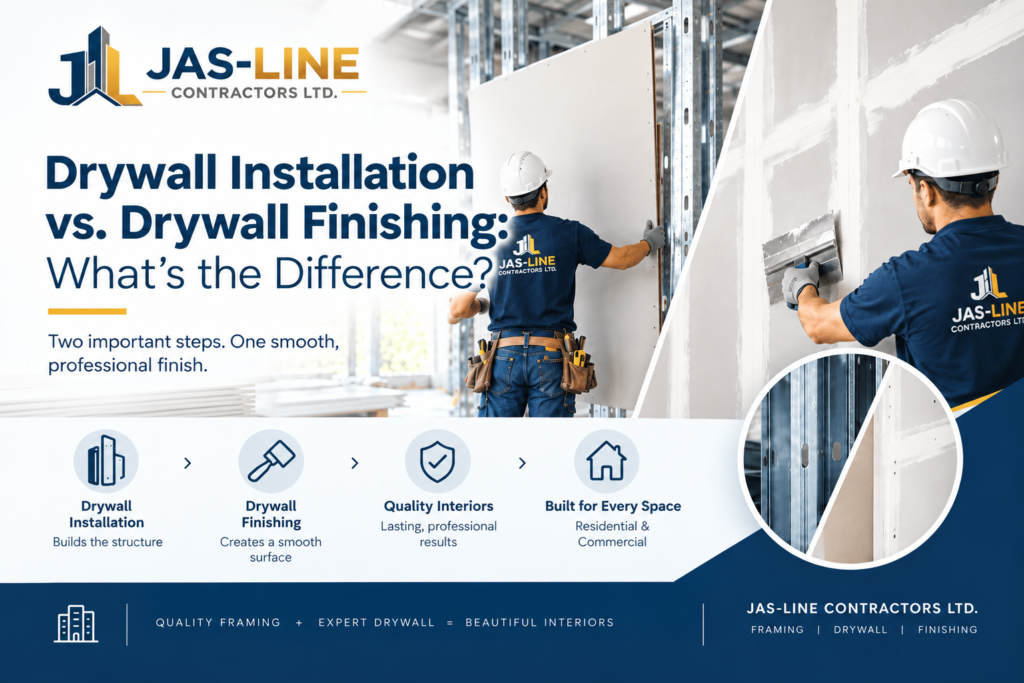
When planning a new construction or renovation project, drywall installation and drywall finishing are two important stages of creating smooth, professional interior walls and ceilings. Although these terms are often used together, they describe different parts of the drywall process.
Understanding the difference between drywall installation and finishing can help homeowners, builders, and commercial property owners understand what is involved and why both stages matter. CONTACT US
What Is Drywall Installation?
Drywall installation is the process of attaching drywall panels to a properly prepared framing system. The framing may consist of steel studs or wood framing, depending on the project.
During installation, drywall panels are measured, cut, positioned, and secured to the framing using appropriate fasteners. Installers also need to account for openings such as doors, windows, electrical boxes, and other building components.
The main purpose of drywall installation is to create the basic wall or ceiling surface. Proper installation helps ensure that the panels are securely attached, properly aligned, and ready for the finishing stage.
What Is Drywall Finishing?
Drywall finishing begins after the drywall panels have been installed. The goal is to create a smooth and even surface by treating the joints, corners, and fastener locations.
The process commonly includes:
- Applying drywall joint tape over panel joints
- Applying joint compound to seams and fasteners
- Installing and finishing corner areas
- Applying additional coats of compound where required
- Sanding the surface for a smooth finish
- Inspecting and correcting imperfections
The required level of finishing can vary depending on the project. For example, Level 4 drywall finish is commonly used for many finished interior areas, while Level 5 drywall finish provides a higher level of surface uniformity for applications where a very smooth appearance is important.
Why Professional Drywall Work Matters
Quality drywall installation and finishing work can make a significant difference to the final appearance of an interior space. Properly installed panels provide a stable surface, while careful finishing helps create the smooth appearance needed before painting or other wall treatments.
Professional drywall contractors understand how to coordinate installation with framing, electrical, plumbing, insulation, and other construction stages. They can also identify issues such as uneven surfaces, poorly aligned panels, or joint imperfections before the project reaches the final stage.
Where Are These Services Used?
Drywall installation and finishing services are commonly used for:
- New residential construction
- Home renovations and remodeling
- Basement development
- Interior wall and ceiling projects
- Office and commercial spaces
- Retail and tenant improvement projects
- Drywall repairs and replacements
Whether the project is a single room or a larger commercial build-out, the installation and finishing stages need to work together.
Why Choose Professional Drywall Services?
Choosing an experienced drywall contractor can help ensure that the work is properly planned and completed according to the project’s requirements. At Jas-Line Contractors Ltd., professional drywall services include installation, taping, mudding, sanding, repairs, and finishing for residential and commercial projects.
The team focuses on proper preparation and attention to detail to help deliver clean, smooth, and professional interior surfaces.
Final Thoughts
Drywall installation and drywall finishing are different steps, but both are essential to achieving quality interior walls and ceilings. Installation creates the foundation, while finishing prepares the surface for painting or other treatments.
Understanding these differences can help you plan your project more effectively and choose the right drywall installation and finishing services for your needs. CONTACT US
Frequently Asked Questions
1. Is drywall installation the same as drywall finishing?
No. Drywall installation involves attaching panels to the framing, while drywall finishing involves taping, applying joint compound, sanding, and preparing the surface for painting.
2. Can drywall be installed without finishing?
Yes, drywall panels can be installed without being fully finished, but the seams and fasteners will remain visible. Finishing is required for a smooth, professional appearance.
3. How long does drywall finishing take?
The timeline depends on the project size, finish level, number of coats, drying conditions, and required repairs. Larger or more detailed projects generally take longer.
4. What is the difference between Level 4 and Level 5 drywall finish?
Level 4 drywall finish provides a smooth surface suitable for many standard applications. Level 5 drywall finish adds a skim coat to achieve greater surface uniformity, particularly where lighting or the final appearance makes imperfections more noticeable.
5. Should I hire a professional drywall contractor?
For larger construction, renovation, or commercial projects, hiring an experienced professional drywall contractor can help ensure proper installation, finishing, and coordination with other trades. CONTACT US